Fish ponds require periodic maintenance to keep them healthy and looking good, below you will find a basic schedule for some of the pond maintence activities you should be doing from time to time. Here at The Fish Works we have a dedicated team of proffesional staff available for on site pond maintence, we are always happy to help if you want someone else to do the dirty work for you!
Every pond is different, but all have a set range of water parameters that will keep your fish safe and happy.
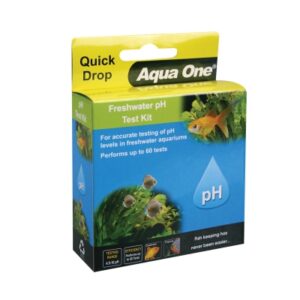
Perhaps once per month, you should test the pH and Ammonia of your pond to make sure it is within a safe range. pH should be around 6.8 – 7.4 while Ammonia should be below 0.5. Chemicals can be added to the water if the pH falls outside of this range, and a water change should be done if ammonia is too high.
Ammonia and pH are the most important staples to test, but we also sell kits to measure nitrates, phosphates, kH/alkalinity and copper. If in doubt you can always feel free to come and visit us in store where we are able to conduct free in depth water tests. You can purchase water test kits for your pond HERE.
Controlling floating debris
Leaves and other floating debris should be netted out of the pond every now and then, so as to prevent them from decomposing in your water.
If you find you are having to do this multiple times a day it might be worthwhile to invest in a skimmer box to do it for you. A skimmer houses a pump that sucks in water from the pond surface, dragging surface debris along with it to trap them in a cage. All you have to do is empty out the cage every now and then once it is full. You can purchase pond skimmers HERE.
Your filter will need to be cleaned periodically, the frequency and way you will do this depends on what specific filter you have. If it is a pressure filter such as the OASE filtoclear or PondMAX PF series they can be easily backwashed every month or so (more or less often depending on the size/stock of your pond). Some gravity filters however will only need cleaning every year or so. If you are unsure as to how often/how to clean your filter just give us a ring and we will be able to walk you through it 🙂
If you are cleaning out your filter sponges by hand, it is best to rinse them out in a bucket of your pond water (avoid using a hose or pressure cleaner). This ensures that none of the beneficial bacteria that has accumulated in these sponges/bioballs is harmed in the process. This bacteria is what helps to biologically filter your water! After they have been rinsed simply replace them into your filter and dump the dirty water into your garden.
Many pond filters will have an inbuilt UV light component to sterilise your water and prevent it from turning green with algae, these lights will need to be replaced every 12 months in order to maintain effectivness. You can find spare UV globes for your pond filter HERE
Every now and then you may notice your pump beginning to slow down. 9 times out of 10 when a faulty pump is brought into the store it is simply a matter of cleaning out the impeller shaft to get it up and running again. The impeller is a magenetised spinning rotor and is what allows the pump to function. Often times when sludge and debri makes its way into the impellers housing it can become jammed up and stop working. If left over time this can cause serious damage and may require you to replace the impeller alltogether. By opening up your pump to rinse out its impeller shaft every few months you will greatly increase its life expectancy. If you are in need of a replacement impeller you can find them for sale HERE
In nature ponds and water ways are constantly being flushed with fresh water, nutrients, and huge populations of beneficial bacteria.
Our home ponds are ‘closed ecosystems’ and often greatly benefit from the addition of certains bacterias and chemicals to keep things aesthetic for us and healthy for its inhabitants.
We always recommend having a good beneficial bacteria. There are hundreds on the market, but we find BBA to be the best. Regular dosing of bacteria helps to consume pond sludge, improve water clarity and remove invisible pollutants such as ammonia and nitrates.
Depending on your pond, you may want to dose an algaecide (of which we have both natural and heavy-hitting options), a flocculent or an all-around maintenance dose. If you want to take the guesswork out of it, you can get an automatic dosing system for ponds to apply whatever treatment you choose at regular intervals.
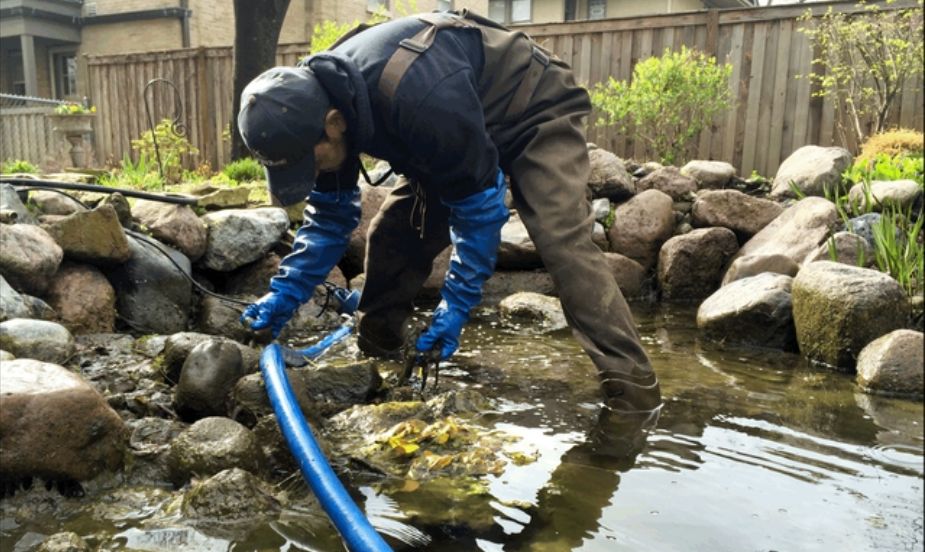
If your pond has a lot of sludge and debris built up in the base, you may want to consider purchasing a vacuum to help remove it. Often attempting to net this gunk out just ends up making a mess! A pond vac will suck up the sludge easily.
We use the Pondovac 4 by OASE on our maintenance jobs; it is our go-to recommendation. However, we do have a variety of vacuums available. You can see our full range of vacuum cleaners for ponds HERE.
Pond Maintenance can be a time consuming task, especially if you do not have all the right pond cleaning equipment.
We offer an on site pond cleaning service to take the effort out of maintaining your fish pond, so you can just enjoy it!
We have garden pond maintenance contracts to over 150 fish ponds all around the Sydney region, from small frog ponds to large commercial ponds. No job is too big or too small!
Our professional team will clean out the pond filter, pressure-wash the sides of your pond, trim your water plants, do a water change. During this time we will keep your fish safely housed in oxygenated tubs. We will also provide you with advice on how to maintain your particular pond, fish and water plants, as well as test your water chemistry and look for signs of fish diseases.
Getting to know how your pond functions and what to look out for can really help you focus your energies and ensure that your pond and filtration system will be effectively.
Click below to read more about our pond maintenance service, to book your own simply fill out the contact form or give us a call today!
Read More